

Broken Corners
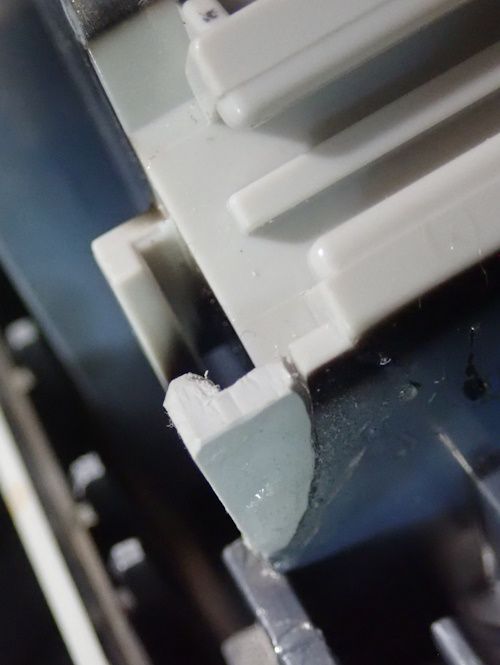
I've seen enough broken cases that I lean toward being pragmatic rather than attempting a pristine repair. A common fracture is on the middle sides where the screen's hinge clips are secured. I usually can recover the broken pieces during disassembly. In this case, a broken-off corner was missing completely. Using its broken twin from the opposite side as a model, I took a scrap piece of ABS and milled it to mimic the dimensions. (My 3D printer is packed away somewhere in the basement).
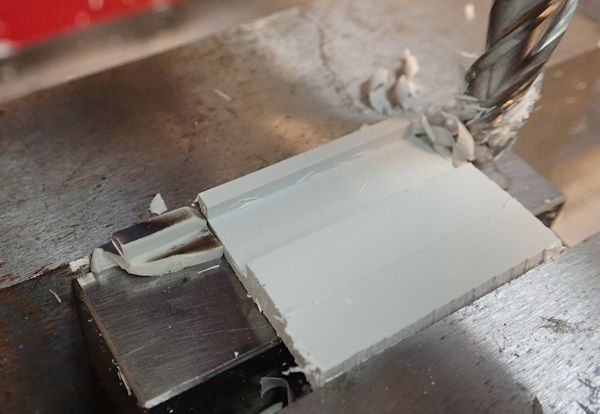
After cutting a chunk free from the larger scrap, I used a metal file to carve away the profile to match the broken corner. As you can see below, my handwork isn't a perfect match, but it is definitely good enough to be functional. Gorilla epoxy firmly attaches and fills the gaps. I post this to demonstrate that sometimes you can use what you have lying around.
Early M5120 Differences?
I noticed a couple of things while working on a 5120 from December 1989. I'd be interested in hearing from people that have Portables manufactured in September (or earlier).
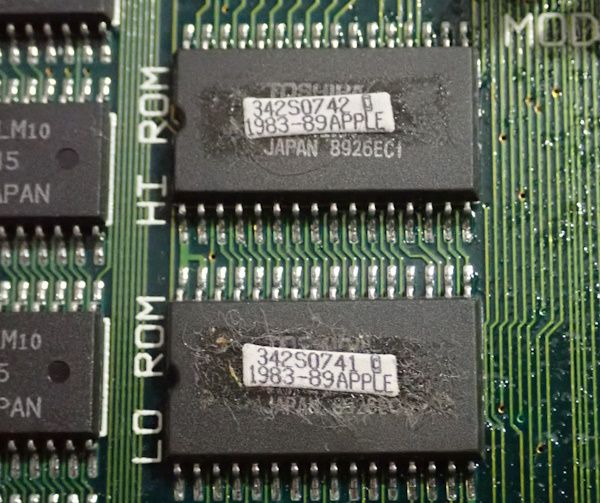
First, the ROMs have odd labels. (Aside, yes this board needs an ultrasonic bath.)
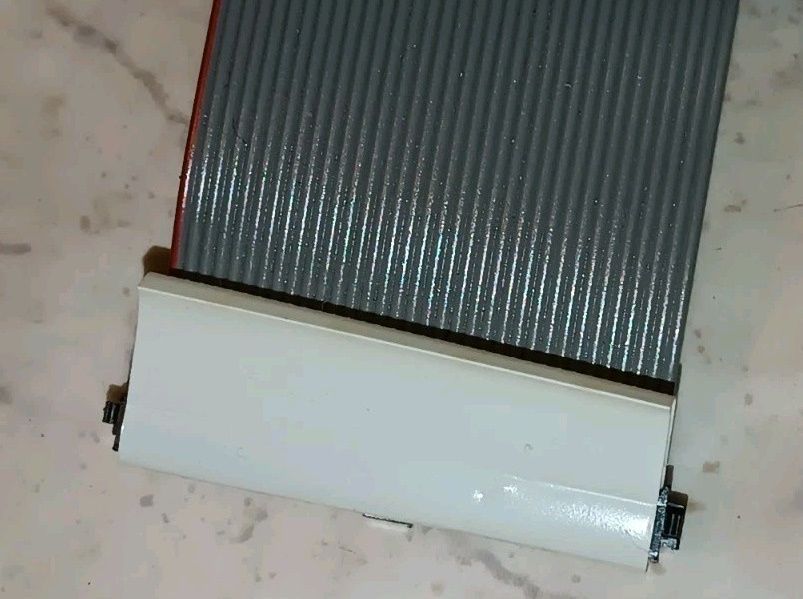
Second, the cable pulls for the keyboard and trackball are made of a weak stretchy plastic.
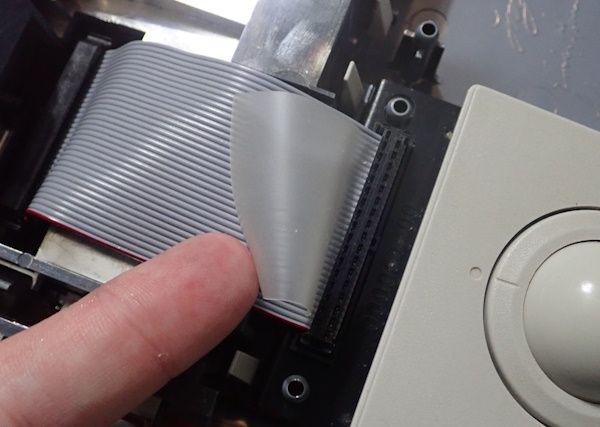
Apple upgraded to a tougher material in later production.
Lastly, the molded clip for the power cable is missing.
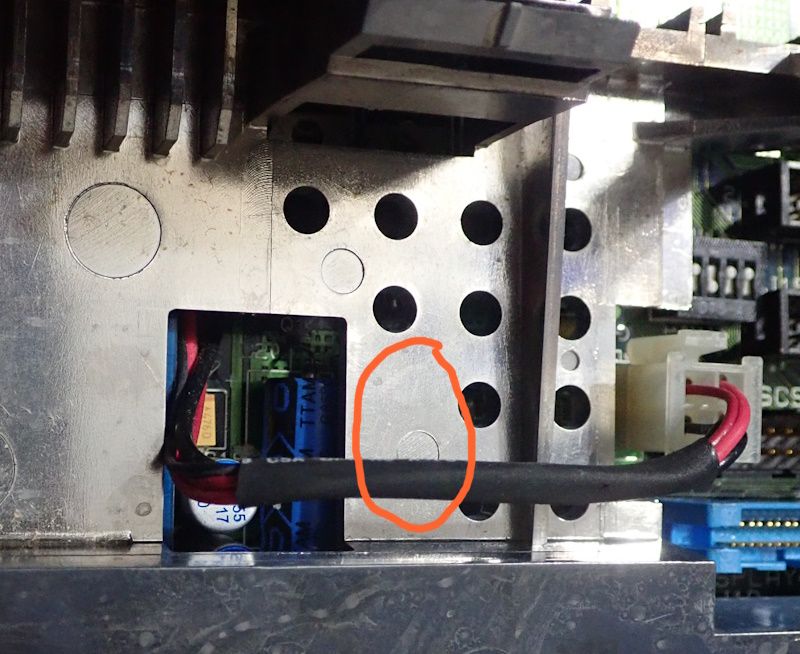
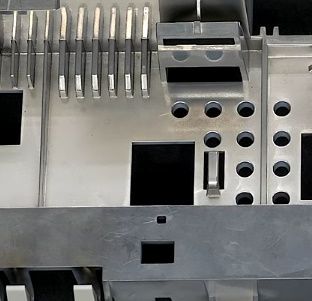
It should look like this.
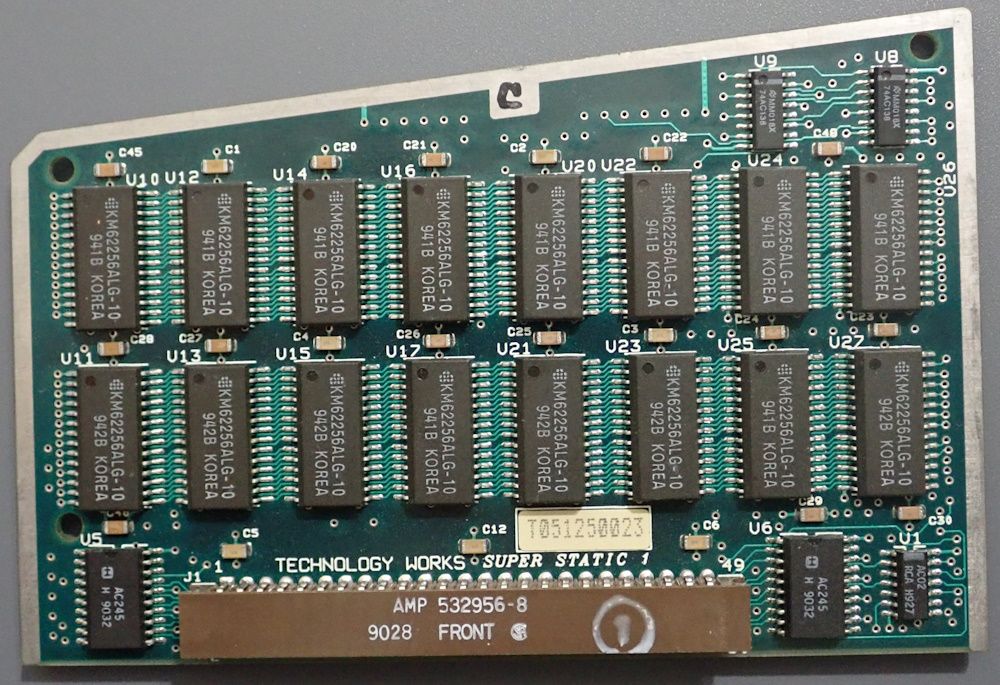
Technology Works Super Static
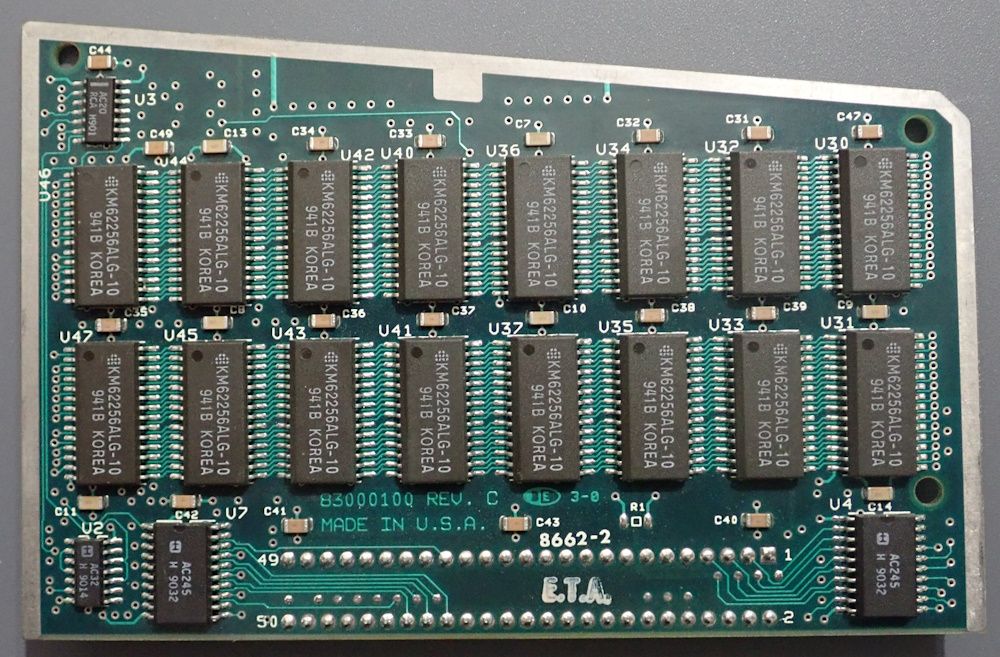
I received a Portable with this 1 MB memory card. However, it doesn't seem to work. There aren't any errors -- it just isn't recognized. The circuitry lacks any sort of PAL/GAL. Any ideas on what's wrong?
- David
I've seen enough broken cases that I lean toward being pragmatic rather than attempting a pristine repair. A common fracture is on the middle sides where the screen's hinge clips are secured. I usually can recover the broken pieces during disassembly. In this case, a broken-off corner was missing completely. Using its broken twin from the opposite side as a model, I took a scrap piece of ABS and milled it to mimic the dimensions. (My 3D printer is packed away somewhere in the basement).
After cutting a chunk free from the larger scrap, I used a metal file to carve away the profile to match the broken corner. As you can see below, my handwork isn't a perfect match, but it is definitely good enough to be functional. Gorilla epoxy firmly attaches and fills the gaps. I post this to demonstrate that sometimes you can use what you have lying around.
Early M5120 Differences?
I noticed a couple of things while working on a 5120 from December 1989. I'd be interested in hearing from people that have Portables manufactured in September (or earlier).
First, the ROMs have odd labels. (Aside, yes this board needs an ultrasonic bath.)
Second, the cable pulls for the keyboard and trackball are made of a weak stretchy plastic.
Apple upgraded to a tougher material in later production.
Lastly, the molded clip for the power cable is missing.
It should look like this.
Technology Works Super Static
I received a Portable with this 1 MB memory card. However, it doesn't seem to work. There aren't any errors -- it just isn't recognized. The circuitry lacks any sort of PAL/GAL. Any ideas on what's wrong?
- David


 The Macintosh Portable housing is absolutely made of Polycarbonate, based on the fact those machines just don't yellow and the housing is surprisingly robust even today. Had that housing been ABS, it would be like the Macintosh Portable's spacebar, which I agree was probably outsourced and used brominated ABS for some strange reason. The other keys don't yellow though.