

A couple of years ago my old Iomega ZIP100 parallel port drive started randomly ejecting disks. Instead of replacing it, I decided to do something slightly unreasonable: reverse-engineer the protocol and build my own ZIP100 emulator. That hobby project eventually became LPT100, a parallel-port ZIP100 emulator implemented on a microcontroller that reads/writes disk images stored on a USB flash drive.
The project ended up being much deeper than expected because there is almost no public documentation of the ZIP parallel protocol. Most of the work involved reverse-engineering the Linux ppa driver, tracing PALMZIP behavior, and capturing port activity.
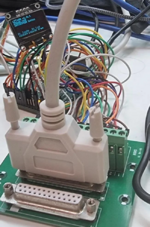
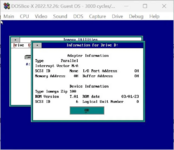
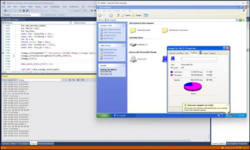
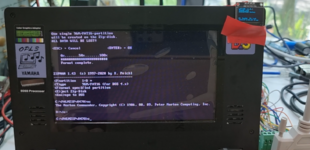
The final project, named LPT100, was implemented on a PIC32MZ microcontroller and tested on MS-DOS/Windows 98/Windows XP/Linux using Super 8086 Box, DOSBox-X and QEMU software emulators. The demo prototype (using the PIC32MZ EF Starter Kit) was also tested with PALMZIP on my Book 8088, with disk images stored on USB flash drive. Parallel port interface was done via GPIO + DMA capture.
I documented everything in two articles:
Part 1 – Protocol reverse engineering + emulator in DOSBox/QEMU
Part 2 – Building the actual hardware
Part 1 Video - Emulator testing (DOSBox + QEMU + multiple OSes):
Part 2 Video - Real hardware LPT100 board running on Book 8088:
On my Book 8088 system, write speed is ~7.2 KB/s, read speed is around 6.3 KB/s in nibble mode, which is actually pretty close to real ZIP parallel performance on 8088 systems. When tested in Windows 98 using DOSBox-X, the speed is around 50-60KB/sec in bidirectional mode. The emulator works perfectly on 8088-class systems, although faster machines (386+) can overwhelm the microcontroller timing. I might consider migrating to a faster MCU (e.g. Teensy) in a future revision.
If anyone here still uses parallel ZIP drives, I would love to hear your thoughts.
The project ended up being much deeper than expected because there is almost no public documentation of the ZIP parallel protocol. Most of the work involved reverse-engineering the Linux ppa driver, tracing PALMZIP behavior, and capturing port activity.
The final project, named LPT100, was implemented on a PIC32MZ microcontroller and tested on MS-DOS/Windows 98/Windows XP/Linux using Super 8086 Box, DOSBox-X and QEMU software emulators. The demo prototype (using the PIC32MZ EF Starter Kit) was also tested with PALMZIP on my Book 8088, with disk images stored on USB flash drive. Parallel port interface was done via GPIO + DMA capture.
I documented everything in two articles:
Part 1 – Protocol reverse engineering + emulator in DOSBox/QEMU
Part 2 – Building the actual hardware
Part 1 Video - Emulator testing (DOSBox + QEMU + multiple OSes):
Part 2 Video - Real hardware LPT100 board running on Book 8088:
On my Book 8088 system, write speed is ~7.2 KB/s, read speed is around 6.3 KB/s in nibble mode, which is actually pretty close to real ZIP parallel performance on 8088 systems. When tested in Windows 98 using DOSBox-X, the speed is around 50-60KB/sec in bidirectional mode. The emulator works perfectly on 8088-class systems, although faster machines (386+) can overwhelm the microcontroller timing. I might consider migrating to a faster MCU (e.g. Teensy) in a future revision.
If anyone here still uses parallel ZIP drives, I would love to hear your thoughts.
Attachments
-
 i-built-an-iomega-zip100-parallel-port-emulator-pic32mz-usb-v0-dv3stlo3q5pg1.png341.8 KB · Views: 6
 -
 i-built-an-iomega-zip100-parallel-port-emulator-pic32mz-usb-v0-splyc293q5pg1(1).png38.9 KB · Views: 7
 -
 i-built-an-iomega-zip100-parallel-port-emulator-pic32mz-usb-v0-xnfoj684q5pg1.png110.8 KB · Views: 7
 -
 Screenshot-2026-03-15-120649.png428.3 KB · Views: 6
 -
 Screenshot-2026-03-15-230032.jpg14.3 KB · Views: 6
