

I recently restored a Mac Portable with a stuck clutch/hinge. Here's what I did to loosen it. Doing so wasn't easy or cheap but the story might be of interest to forum readers — especially a reader who owns a lathe. I don't, but I do have some Deoxit so that's what I tried first. Unfortunately, that didn't free up the stuck clutch. (It is compatible with polycarbonate plastic but do read the manufacturer's advice about this because there are some provisos.)
So I dissassembled the clutch completely then lubricated it with Super Lube. Disassembly and reassembly are very difficult and fresh lubricant didn't resolve the friction problem. So perhaps the real cause of the problem wasn't dry grease but abrasion of the plastic surfaces inside the clutch.
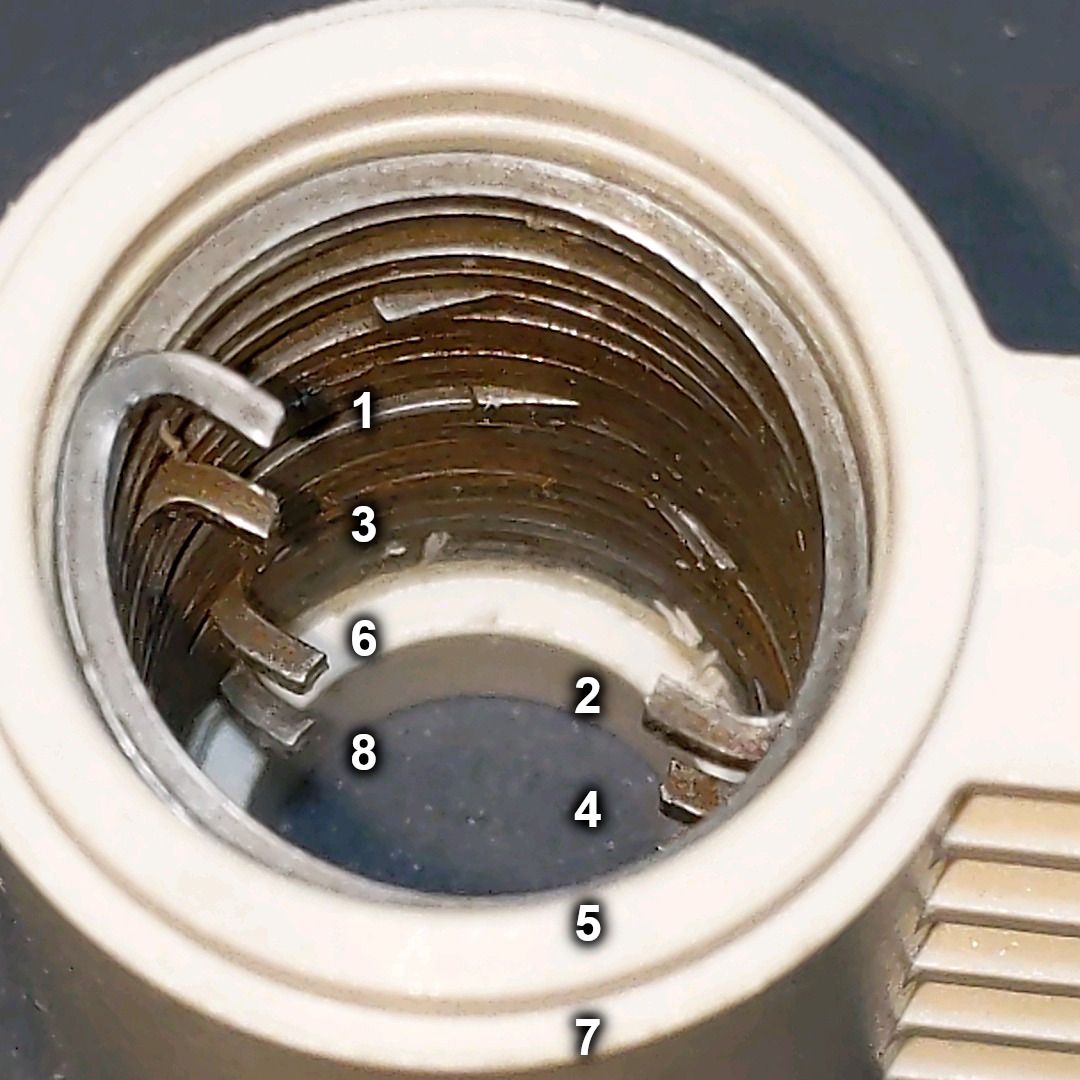
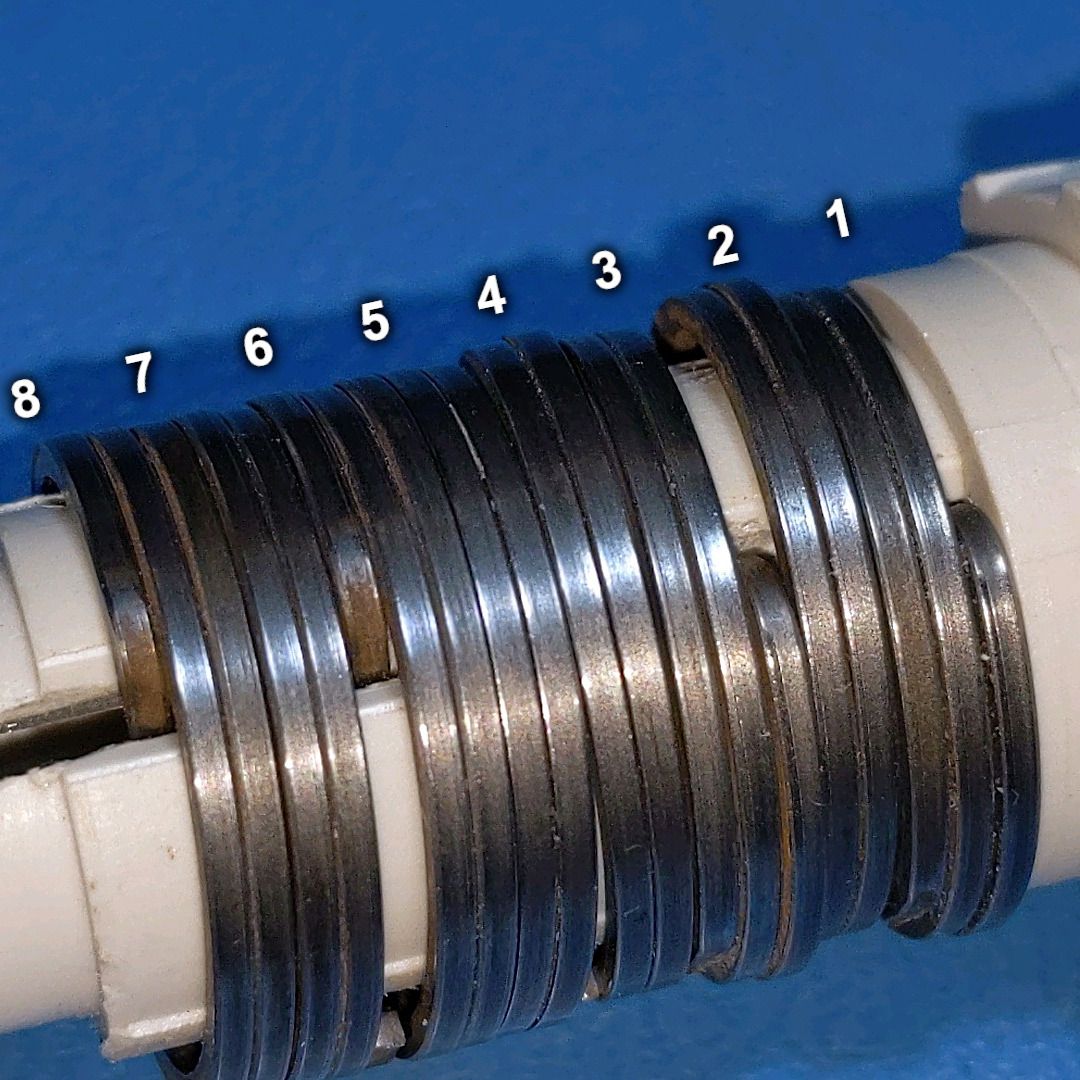
Unfortunately, the plastic cylinder that grips the clutch springs got gouged when I forced the springs back in. And that isn't the only hazard when attempting this — the springs can be deformed when they are dragged in or out of the housing.
So I can't recommend disassembling these clutches. At least, not without some means of compressing the springs for reinsertion. A special tool, maybe something like a small piston ring compressor, might work. Also, a puller might help with sliding the springs straight out of their housing.
In one of his videos, @techknight mentioned a possible solution for stuck clutches, which was to permanently remove a few of the springs from each clutch. So that's what I did. But this introduced a new problem. The missing springs leave a gap and the remaining springs now have room to expand by tilting over. The square corners of a tilted spring then bind with the bore of the plastic cylinder. So they got stuck again.
In the end, I paid a machinist to turn some spacers from aluminium to fill the gap. That did the trick. The resistance in the hinges is much lower now. There's still enough friction to hold the screen up.
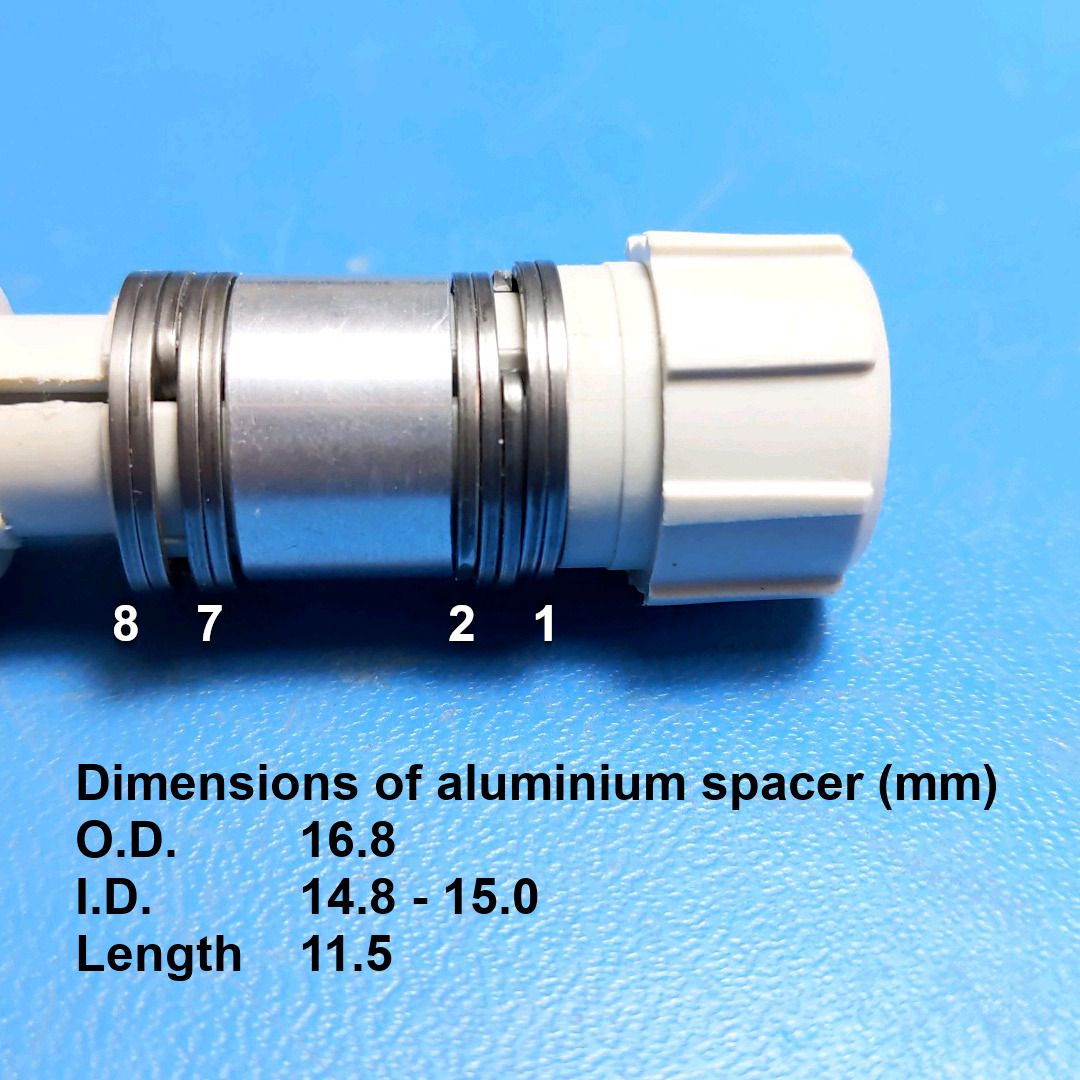
In each hinge, four springs were removed from the middle of the shaft so that the arrangement remains symmetrical. The end springs do exactly the same work as the middle springs; two resist opening and two resist closing. In theory, friction is halved.
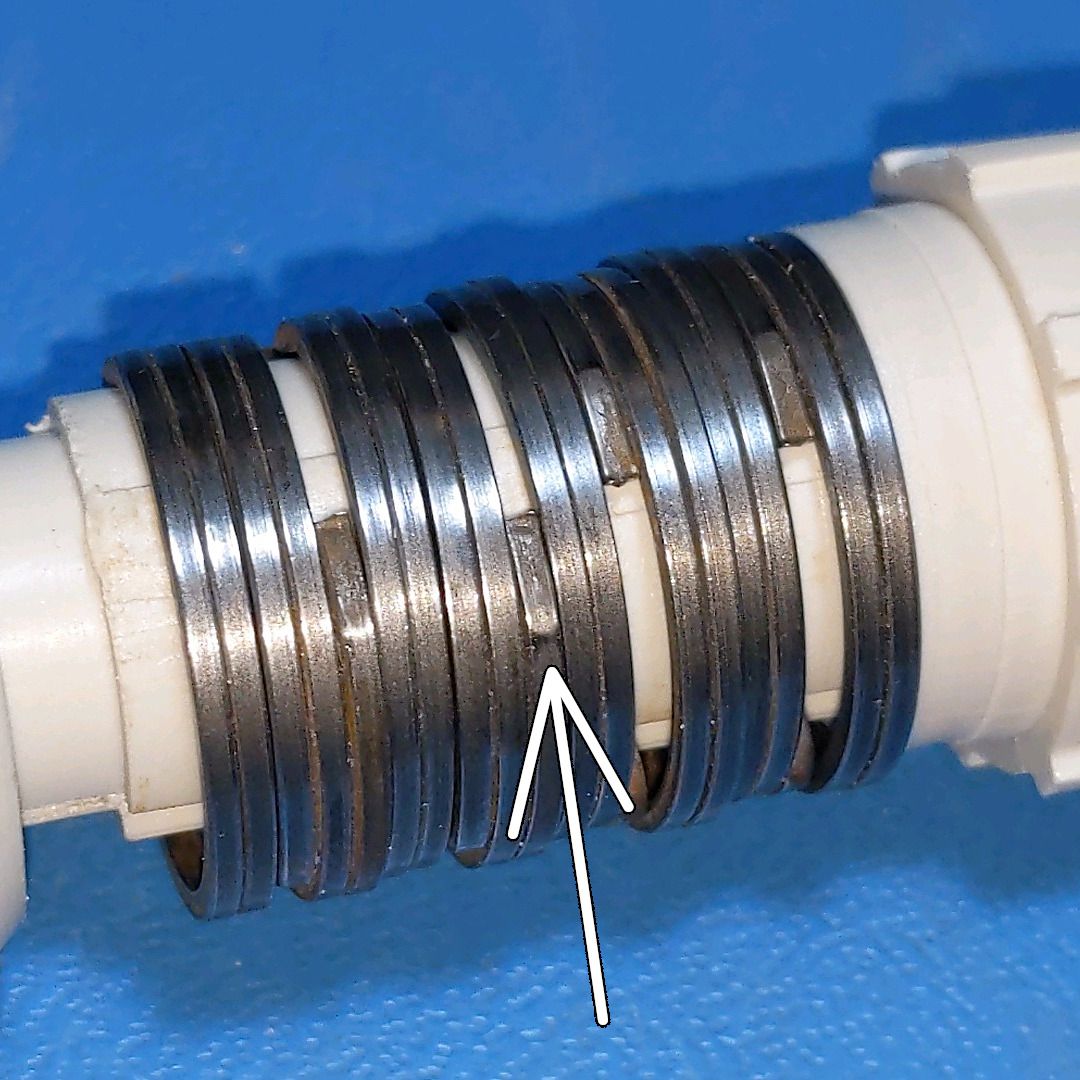
All springs are identical except that their free lengths vary significantly. Some are so short that the trailing end could catch on the ridge on the hinge shaft (indicated with an arrow in the photo). If it did so, this would add to the friction problem. So when I reassembled each hinge, I selected the four longest springs and left out the short ones.
Was it worth all the time, effort and expense? Probably not. From a cost stand-point I should have bought a replacement. But maybe this experiment is helpful to someone. Maybe there's an opportunity here for someone to manufacture new clutch housings from metal instead of plastic. Or re-bore the original plastic part and fit a metal liner. I don't have the tools for that, nor do I have the time, but perhaps others do.
So I dissassembled the clutch completely then lubricated it with Super Lube. Disassembly and reassembly are very difficult and fresh lubricant didn't resolve the friction problem. So perhaps the real cause of the problem wasn't dry grease but abrasion of the plastic surfaces inside the clutch.
Unfortunately, the plastic cylinder that grips the clutch springs got gouged when I forced the springs back in. And that isn't the only hazard when attempting this — the springs can be deformed when they are dragged in or out of the housing.
So I can't recommend disassembling these clutches. At least, not without some means of compressing the springs for reinsertion. A special tool, maybe something like a small piston ring compressor, might work. Also, a puller might help with sliding the springs straight out of their housing.
In one of his videos, @techknight mentioned a possible solution for stuck clutches, which was to permanently remove a few of the springs from each clutch. So that's what I did. But this introduced a new problem. The missing springs leave a gap and the remaining springs now have room to expand by tilting over. The square corners of a tilted spring then bind with the bore of the plastic cylinder. So they got stuck again.
In the end, I paid a machinist to turn some spacers from aluminium to fill the gap. That did the trick. The resistance in the hinges is much lower now. There's still enough friction to hold the screen up.
In each hinge, four springs were removed from the middle of the shaft so that the arrangement remains symmetrical. The end springs do exactly the same work as the middle springs; two resist opening and two resist closing. In theory, friction is halved.
All springs are identical except that their free lengths vary significantly. Some are so short that the trailing end could catch on the ridge on the hinge shaft (indicated with an arrow in the photo). If it did so, this would add to the friction problem. So when I reassembled each hinge, I selected the four longest springs and left out the short ones.
Was it worth all the time, effort and expense? Probably not. From a cost stand-point I should have bought a replacement. But maybe this experiment is helpful to someone. Maybe there's an opportunity here for someone to manufacture new clutch housings from metal instead of plastic. Or re-bore the original plastic part and fit a metal liner. I don't have the tools for that, nor do I have the time, but perhaps others do.


