

I have now added an external antenna to the BlueSCSI inside my PowerBook 160! This doesn't seem to have been done before on a BlueSCSI, so this was a big experiment. I followed the instructions here for adding an external antenna to the Raspberry Pi Pico W, where someone followed a similar process for adding the antenna on a PicoMEM: https://www.tarball.ca/posts/adding-an-external-antenna-to-the-picomem-pi-pico-w/.
I'm happy to report that the antenna seems to be working great, and the WiFi signal on the PowerBook seems much better. The issue with putting a BlueSCSI inside of a PowerBook (or other laptop for that matter) and trying to use the WiFi function is that the laptop, if shielded well, acts like a Faraday cage and severely depreciates the signal strength. After relocating the antenna to the outside of the laptop housing, the signal strength is much better.
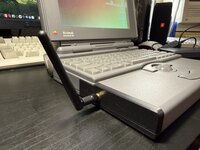
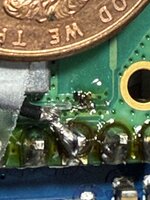
Do I recommend other users do this instead of just buying an external BlueSCSI and doing the diode modification for SCSI termination power? Probably not! The soldering is very tiny, it is much like soldering a strand of hair to a PCB on a pad the size of a breadcrumb (or smaller). Was it worth it in my case? Yes, I wanted the BlueSCSI to be hidden inside and the machine to retain a '90s appearance- external antennas were common in the '90s on mobile devices, so it fits in with the era in a way that it almost looks like it could have been an upgrade back then.
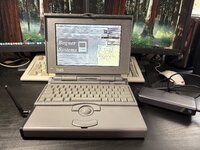
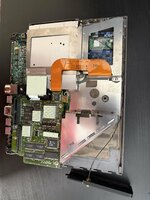
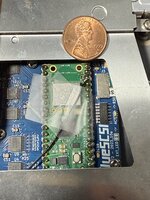
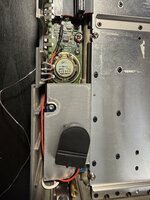
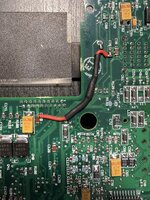
Here are some photos of the modifications- I did the diode mod, replaced the CMOS battery with a CR2032 (with diode!), and added the antenna mounted on a 3D printed replacement battery door (I didn't want to modify the original one).
If you are daring enough to attempt this yourself, here is the link to the antenna I used: https://www.amazon.com/dp/B099R4V7HL?ref_=ppx_oui_title_mob_b_fed_asin_title_0_0&th=1
My machine specs are PowerBook 160 with 4Mb of RAM and BlueSCSI V2 PowerBook. Side note, if anyone has spare RAM upgrade boards for the 160/165, let me know
I'm happy to report that the antenna seems to be working great, and the WiFi signal on the PowerBook seems much better. The issue with putting a BlueSCSI inside of a PowerBook (or other laptop for that matter) and trying to use the WiFi function is that the laptop, if shielded well, acts like a Faraday cage and severely depreciates the signal strength. After relocating the antenna to the outside of the laptop housing, the signal strength is much better.
Do I recommend other users do this instead of just buying an external BlueSCSI and doing the diode modification for SCSI termination power? Probably not! The soldering is very tiny, it is much like soldering a strand of hair to a PCB on a pad the size of a breadcrumb (or smaller). Was it worth it in my case? Yes, I wanted the BlueSCSI to be hidden inside and the machine to retain a '90s appearance- external antennas were common in the '90s on mobile devices, so it fits in with the era in a way that it almost looks like it could have been an upgrade back then.
Here are some photos of the modifications- I did the diode mod, replaced the CMOS battery with a CR2032 (with diode!), and added the antenna mounted on a 3D printed replacement battery door (I didn't want to modify the original one).
If you are daring enough to attempt this yourself, here is the link to the antenna I used: https://www.amazon.com/dp/B099R4V7HL?ref_=ppx_oui_title_mob_b_fed_asin_title_0_0&th=1
My machine specs are PowerBook 160 with 4Mb of RAM and BlueSCSI V2 PowerBook. Side note, if anyone has spare RAM upgrade boards for the 160/165, let me know
Attachments
Last edited: