

Hi all,
As some of you may know, most of my Apple II hobby has been centered about making the II do things it wasn't supposed to do, without 21st century hardware in the computer. That translated, in most cases, to interacting with serial devices:
- a Linux-based proxy for internet access, audio and video streaming, printing to modern printers, etc
- a Quicktake program for digital photography, that requires a Frankencable for the ACIA 6551s to be able to drive the Quicktake camera
I've learnt how to make PCBs in the last months, and have been enjoying it a lot, so I set out to make my projects more easily accessible, and designed three devices:
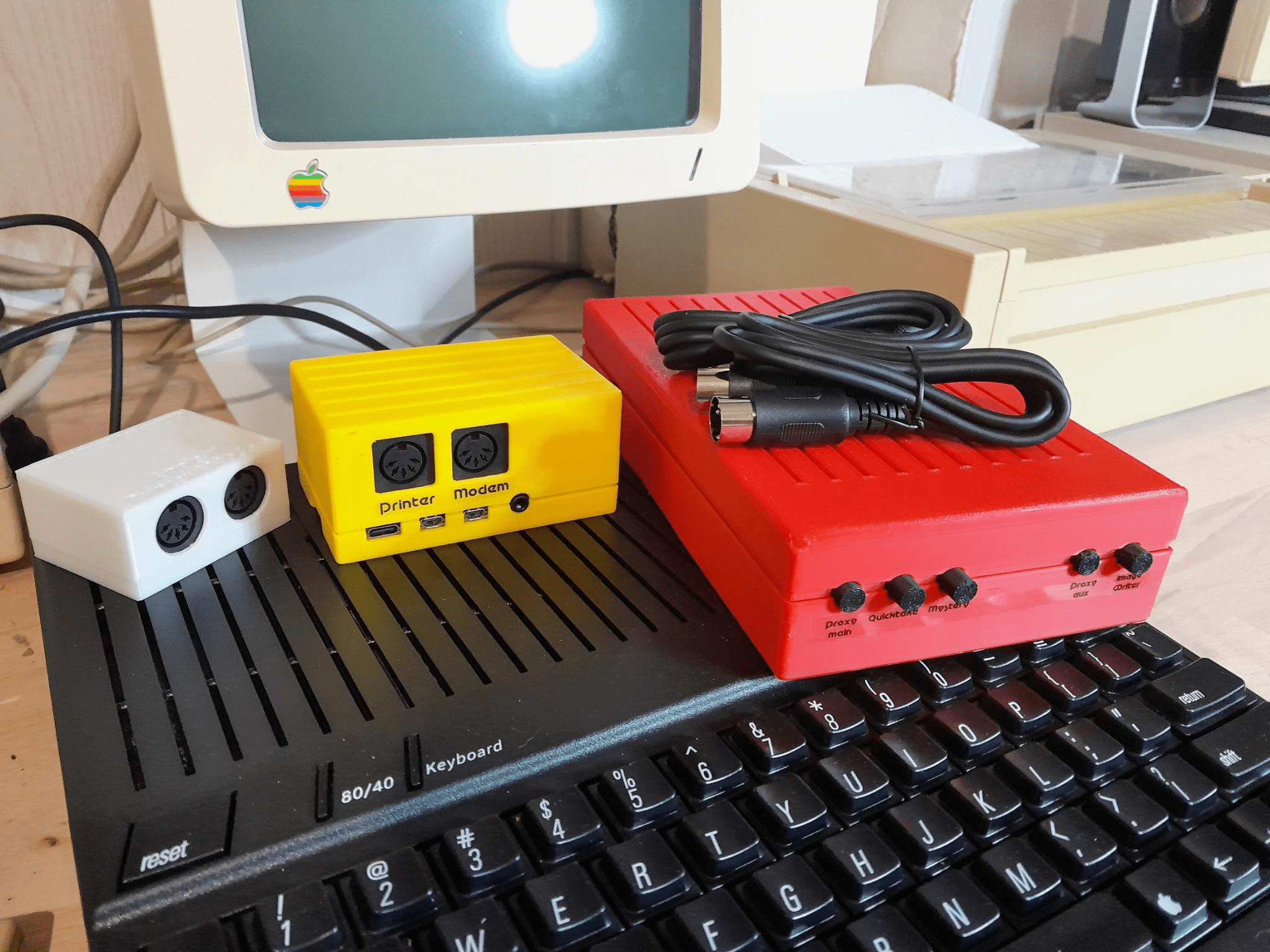
- a Raspberry Serial Hat that makes connecting an Apple II to a Raspberry easy
- a Quicktake Connector Box that makes the Frankencable replaceable by standard cables
- the CISD ("Colin's Integrated Serial Device"), that is basically the fusion of the two previous ones: a large Raspberry hat that is in essence a serial switchbox, allowing to toggle between proxy, Quicktake, virtual printer, physical printer and a fifth device without needing to changes cables and connections.
I've also designed a set of adapters to allow connecting any Apple II to those and/or to other devices, complete with optional null-modems.
I hope you might find those interesting!
As some of you may know, most of my Apple II hobby has been centered about making the II do things it wasn't supposed to do, without 21st century hardware in the computer. That translated, in most cases, to interacting with serial devices:
- a Linux-based proxy for internet access, audio and video streaming, printing to modern printers, etc
- a Quicktake program for digital photography, that requires a Frankencable for the ACIA 6551s to be able to drive the Quicktake camera
I've learnt how to make PCBs in the last months, and have been enjoying it a lot, so I set out to make my projects more easily accessible, and designed three devices:
- a Raspberry Serial Hat that makes connecting an Apple II to a Raspberry easy
- a Quicktake Connector Box that makes the Frankencable replaceable by standard cables
- the CISD ("Colin's Integrated Serial Device"), that is basically the fusion of the two previous ones: a large Raspberry hat that is in essence a serial switchbox, allowing to toggle between proxy, Quicktake, virtual printer, physical printer and a fifth device without needing to changes cables and connections.
I've also designed a set of adapters to allow connecting any Apple II to those and/or to other devices, complete with optional null-modems.
I hope you might find those interesting!
