

Any interest in Palm Pilots?
- Thread starter padcrafting
- Start date
You are using an out of date browser. It may not display this or other websites correctly.
You should upgrade or use an alternative browser.
You should upgrade or use an alternative browser.
The 690 was a lot better than the 680, but on the whole I wasn't impressed with CE. I did land a verrrry interesting CE device recently, however. More when it arrives.
I do have one of the MIPS IBM WorkPads (see https://oldvcr.blogspot.com/2022/09/the-mips-thinkpad-kind-of.html ). The keyboard, once I fixed it, is great, and it's probably the most practical CE device I've used, but the NEC MIPS CPU is sluggish. Sure pretty though.
I do have one of the MIPS IBM WorkPads (see https://oldvcr.blogspot.com/2022/09/the-mips-thinkpad-kind-of.html ). The keyboard, once I fixed it, is great, and it's probably the most practical CE device I've used, but the NEC MIPS CPU is sluggish. Sure pretty though.

I've got one of those! (Jornada 680) Running the JLime Linux distro off a 1g sd card. It's interesting since it uses an unusual CPU, the SH3, little brother to the SH4 that the Sega Dreamcast uses. There were a lot of Windows CE devices that used this CPU, but little else.
https://www.reddit.com/r/retrobattlestations/comments/il3skf
Anybody else have a Tapwave Zodiac? Way ahead of its time. It's even got (probably extremely primitive) 3d accelerator.

 en.wikipedia.org
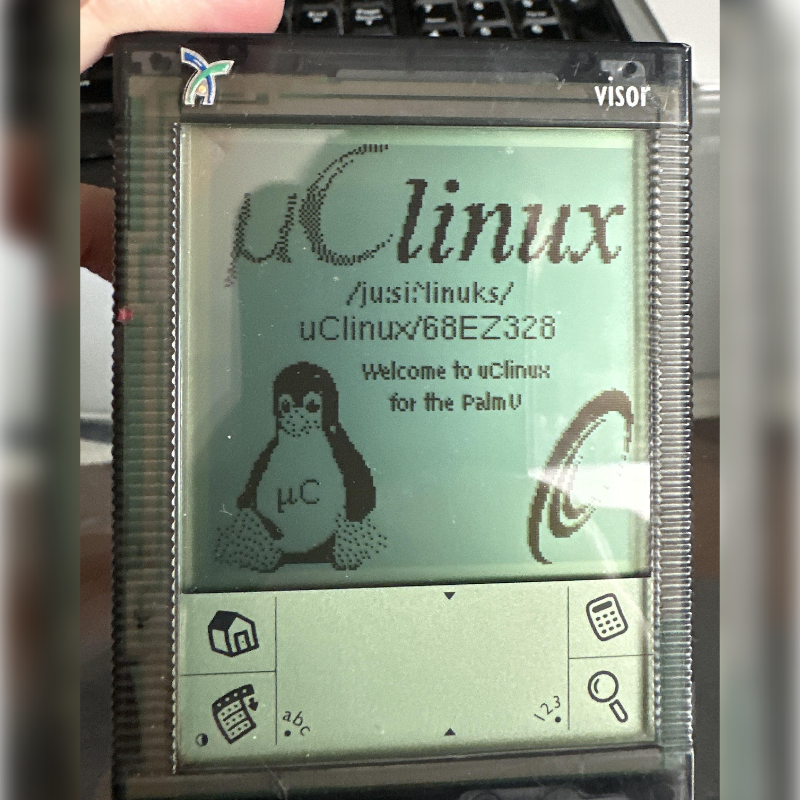
One thing I never got around to...and still meaning to if I find the time...is uCLinux on Palm. It's a very very cut down version of Linux. No gui, I think only a terminal via serial.
 palmdb.net
----
And...while we're at it...if anyone else is interested in coding for the Palm using CodeWarrior, drop me a line. I used to do a lot back in the day, and have been meaning to get back into it. I've been doing a lot of m68k Mac coding recently...and having some fun with the challenges of fitting into the limitations of such "small" systems.
https://www.reddit.com/r/retrobattlestations/comments/il3skf
Anybody else have a Tapwave Zodiac? Way ahead of its time. It's even got (probably extremely primitive) 3d accelerator.
Tapwave Zodiac - Wikipedia
One thing I never got around to...and still meaning to if I find the time...is uCLinux on Palm. It's a very very cut down version of Linux. No gui, I think only a terminal via serial.
uClinux
This boots a minimal linux instance on supported Palm devices. Steps: - Hotsync the prc file to you device. - Setup a direct serial connection at 9600baud in a
----
And...while we're at it...if anyone else is interested in coding for the Palm using CodeWarrior, drop me a line. I used to do a lot back in the day, and have been meaning to get back into it. I've been doing a lot of m68k Mac coding recently...and having some fun with the challenges of fitting into the limitations of such "small" systems.
I like NetBSD more on the J690. I always thought the SuperH should have done better in the market. They're surprisingly nice to program.
I've toyed with getting a Zodiac, but the sellers generally want stupid money, and I'm not *that* interested.
For my Palm development, I usually crossbuild with gcc, or write directly in Plua.
I've toyed with getting a Zodiac, but the sellers generally want stupid money, and I'm not *that* interested.
For my Palm development, I usually crossbuild with gcc, or write directly in Plua.
In some ways the SuperH was ahead of its time. It has the "compressed" 16 bit opcodes not unlike thumb for arm.
Dang! I totally forgot that "NetBSD runs on EVERYTHING"! Do you like it? I've never tried except on intel boxes...and struggled to get it going on a PowerBook 180, but couldn't get the install/format/partition steps right. I was using an old version in the hopes it would squeeze into the limited memory. My next step is to install it on an external scsi drive using a quadra 800 and then boot the PowerBook off that...probably should have better luck.
I looked into gcc for Palm but since I had bought CodeWarrior Palm and was familiar with it on Macs and Windows didn't go too far. I liked the gui designer.
Dang! I totally forgot that "NetBSD runs on EVERYTHING"! Do you like it? I've never tried except on intel boxes...and struggled to get it going on a PowerBook 180, but couldn't get the install/format/partition steps right. I was using an old version in the hopes it would squeeze into the limited memory. My next step is to install it on an external scsi drive using a quadra 800 and then boot the PowerBook off that...probably should have better luck.
I looked into gcc for Palm but since I had bought CodeWarrior Palm and was familiar with it on Macs and Windows didn't go too far. I liked the gui designer.
Seems to work very well on it. My NetBSD systems are a IIci, a Q605, a G4 mini, an RPi and the Jornada (I also have it on a card for my MIPS WorkPad but I usually run it in WinCE), so I have a long history with it. In general I like the BSDs more as servers, and the J690 is indeed just that, a microserver I bring along for demonstrations.
Sure would be cool if a "nommu" version of NetBSD could be ported to Palm, eh?
That'd only be for the m68k Palms, of course...the ARM based ones could run the full kernel! I did some work way back on getting Linux to run on the Dell Axim x3 (I won one in a raffle) and figuring out the GPIO's was a pain, never finished. If any of the ARM Palms had hardware similar enough https://wiki.netbsd.org/ports/hpcarm/ would be technically possible. It looks like they have it running only on StrongArm/PXA, a Palm using that (as opposed to the OMAP ones) would be a target...but a major challenge figuring out the hardware. Or maybe a rump kernel?
Browsing the source of this would be a start...whereever it is: https://palmdb.net/app/palm-linux
Have you tried NetBSD on Dreamcast?
That'd only be for the m68k Palms, of course...the ARM based ones could run the full kernel! I did some work way back on getting Linux to run on the Dell Axim x3 (I won one in a raffle) and figuring out the GPIO's was a pain, never finished. If any of the ARM Palms had hardware similar enough https://wiki.netbsd.org/ports/hpcarm/ would be technically possible. It looks like they have it running only on StrongArm/PXA, a Palm using that (as opposed to the OMAP ones) would be a target...but a major challenge figuring out the hardware. Or maybe a rump kernel?
Browsing the source of this would be a start...whereever it is: https://palmdb.net/app/palm-linux
Have you tried NetBSD on Dreamcast?
Last edited:
Have you tried NetBSD on Dreamcast?
I have, but it's not too useful without an NFS mount for it, so you really need a BBA. The Dreamcast Linux that circulates out there is old but is a complete system even standalone, so it works fine with my Treamcast too. I have the build I use up here: https://github.com/classilla/dclinux
I've been using the same Tungsten T5 since original purchase in 2004 (22 years in September). The only thing I've replaced is the WiFi card that fits in the SDIO port, and that was a $5 ebay purchase in 2010. Though, getting it online these days is silly. The driver (closed) and hardware (also closed) only supports outdated Wifi handshaking and wep. I can, at best, visit some old html sites and frogfind (though it fails to render the parsed resulting links). And, the wifi card is headache inducing - which can't be healthy.
My device is starting to show its age. While I've done something to the aesthetics, it is largely as it was when I bought it. The power button is spotty at best. To wake it up I have to press the home button a few times. I replaced the stylus a few times, but found a five-pack somehow years ago, and 4 of them are still in the box.
The battery still lasts about two days provided I don't boot to linux or engage the wifi card. There is an area in my SD Card storage box for just the palm, all of them are loaded with mp3's and old documents from college. Some old tax documents. Believe it or not.
For many people it was a novelty device, to me it was my life wrapped up in the metal device. I was in college, actually. I used it to keep track of my class demands as well as my tutoring schedule (how I paid my way through school). I still use the tasks and reminders, calendar items, jot notes. And I have HEAPS of games on it.
Nothing about this device is novel. It's just that none of it is synchronized online like modern equilvalents are. If the IO fails on here, alot of historical information, old love notes from my wife (then girlfriend). The pictures and stuff can be taken off, and have been. I may be able to export some ofthe more proprietary stuff. But who knows?
The Palm OS was sold to another company when Palm decided to start with a fresh Linux OS for their future line of smartphones. They used that capital to fund development of WebOS and the Palm Pre. The Original Garnet OS was quietly mothballed by the IP owner as the market shifted to newer OS's.
Palm simply didn't want to rewrite their OS to be webcentric and multitasking. It's easier to engage an established OS that already has those features built in. This is a rabbit hole I explored some time ago when I considered what it would take to begin using my palm again for things I used to... Like ssh'ing into my linux server or pulling imap email. None of these things are possible these days since the old clients are too old to support modern ciphers - to say nothing about the ARM cpu and very small memory footprint.
There is no community around the Palm these days. The OS is closed, there's no real FS.The SDK is closed and supremely outdated. The SDIO supports only fat16 and can't recognize newer SDCard tech. The serial connector wasn't standardized and can't utilize the system resources like a real serial port would. It was only meant for data sync with a desktop client (a concept apple stole for itunes/ipod). So, the solitary connector is useless outside its design criteria.
For models like the T5, you can slap linux on a sdcard butyoucan't get it online because the SDIO port needs to be free for wifi. In the end, you have an isolated outdated linux distro that has a different set of games and PDA tools unrelated to your existing dataset. Just a fun toy, is all.
The palm-sphere is a dead planet adrift in space with only a few fools (like me) who still like to play solitaire and bejeweled.
It would be really sad, honestly, if it were novel. But it isn't. It's offerings are primitive compared to modern tools (which are huge improvements).
Do you want to create a modern PDA? Put your existing smartphone in airplane mode, wow that was fast.
As a side note, i considered writing a fresh new ssh client for palm written in C. Then reality set in after my morning shit:
1. Must work with palm's primitive tcp/ip stack
2. Palm apps have very tight dynamic heap constraints. Big crypto handshakes and buffering would be torture considering hardware constraints
3. I'd have to create a fresh new terminal interface (think vt100-like) and screen rendering. Event driven loops.
4. I'd have to map ssh i/o to palm netlib calls (undocumented or lacking 1 for 1)
5. Crypto needs good randomness, palm's IO is quite limited.
6. I'd have to engineer a good key store. Where and how? Private keys and known hosts, etc.
7. Event handling must fit withing OS's tolerances, otherwise heap overflows or fragmentation and random reboots.
That's ALOT of work and, ultimately, a sunk cost trap.
My device is starting to show its age. While I've done something to the aesthetics, it is largely as it was when I bought it. The power button is spotty at best. To wake it up I have to press the home button a few times. I replaced the stylus a few times, but found a five-pack somehow years ago, and 4 of them are still in the box.
The battery still lasts about two days provided I don't boot to linux or engage the wifi card. There is an area in my SD Card storage box for just the palm, all of them are loaded with mp3's and old documents from college. Some old tax documents. Believe it or not.
For many people it was a novelty device, to me it was my life wrapped up in the metal device. I was in college, actually. I used it to keep track of my class demands as well as my tutoring schedule (how I paid my way through school). I still use the tasks and reminders, calendar items, jot notes. And I have HEAPS of games on it.
Nothing about this device is novel. It's just that none of it is synchronized online like modern equilvalents are. If the IO fails on here, alot of historical information, old love notes from my wife (then girlfriend). The pictures and stuff can be taken off, and have been. I may be able to export some ofthe more proprietary stuff. But who knows?
The Palm OS was sold to another company when Palm decided to start with a fresh Linux OS for their future line of smartphones. They used that capital to fund development of WebOS and the Palm Pre. The Original Garnet OS was quietly mothballed by the IP owner as the market shifted to newer OS's.
Palm simply didn't want to rewrite their OS to be webcentric and multitasking. It's easier to engage an established OS that already has those features built in. This is a rabbit hole I explored some time ago when I considered what it would take to begin using my palm again for things I used to... Like ssh'ing into my linux server or pulling imap email. None of these things are possible these days since the old clients are too old to support modern ciphers - to say nothing about the ARM cpu and very small memory footprint.
There is no community around the Palm these days. The OS is closed, there's no real FS.The SDK is closed and supremely outdated. The SDIO supports only fat16 and can't recognize newer SDCard tech. The serial connector wasn't standardized and can't utilize the system resources like a real serial port would. It was only meant for data sync with a desktop client (a concept apple stole for itunes/ipod). So, the solitary connector is useless outside its design criteria.
For models like the T5, you can slap linux on a sdcard butyoucan't get it online because the SDIO port needs to be free for wifi. In the end, you have an isolated outdated linux distro that has a different set of games and PDA tools unrelated to your existing dataset. Just a fun toy, is all.
The palm-sphere is a dead planet adrift in space with only a few fools (like me) who still like to play solitaire and bejeweled.
It would be really sad, honestly, if it were novel. But it isn't. It's offerings are primitive compared to modern tools (which are huge improvements).
Do you want to create a modern PDA? Put your existing smartphone in airplane mode, wow that was fast.
As a side note, i considered writing a fresh new ssh client for palm written in C. Then reality set in after my morning shit:
1. Must work with palm's primitive tcp/ip stack
2. Palm apps have very tight dynamic heap constraints. Big crypto handshakes and buffering would be torture considering hardware constraints
3. I'd have to create a fresh new terminal interface (think vt100-like) and screen rendering. Event driven loops.
4. I'd have to map ssh i/o to palm netlib calls (undocumented or lacking 1 for 1)
5. Crypto needs good randomness, palm's IO is quite limited.
6. I'd have to engineer a good key store. Where and how? Private keys and known hosts, etc.
7. Event handling must fit withing OS's tolerances, otherwise heap overflows or fragmentation and random reboots.
That's ALOT of work and, ultimately, a sunk cost trap.

We have a retro proxy for the forum, you might be able to view it on a Palm device, I know it works with Newton!I've been using the same Tungsten T5 since original purchase in 2004 (22 years in September). The only thing I've replaced is the WiFi card that fits in the SDIO port, and that was a $5 ebay purchase in 2010. Though, getting it online these days is silly. The driver (closed) and hardware (also closed) only supports outdated Wifi handshaking and wep. I can, at best, visit some old html sites and frogfind (though it fails to render the parsed resulting links). And, the wifi card is headache inducing - which can't be healthy.
My device is starting to show its age. While I've done something to the aesthetics, it is largely as it was when I bought it. The power button is spotty at best. To wake it up I have to press the home button a few times. I replaced the stylus a few times, but found a five-pack somehow years ago, and 4 of them are still in the box.
The battery still lasts about two days provided I don't boot to linux or engage the wifi card. There is an area in my SD Card storage box for just the palm, all of them are loaded with mp3's and old documents from college. Some old tax documents. Believe it or not.
For many people it was a novelty device, to me it was my life wrapped up in the metal device. I was in college, actually. I used it to keep track of my class demands as well as my tutoring schedule (how I paid my way through school). I still use the tasks and reminders, calendar items, jot notes. And I have HEAPS of games on it.
Nothing about this device is novel. It's just that none of it is synchronized online like modern equilvalents are. If the IO fails on here, alot of historical information, old love notes from my wife (then girlfriend). The pictures and stuff can be taken off, and have been. I may be able to export some ofthe more proprietary stuff. But who knows?
The Palm OS was sold to another company when Palm decided to start with a fresh Linux OS for their future line of smartphones. They used that capital to fund development of WebOS and the Palm Pre. The Original Garnet OS was quietly mothballed by the IP owner as the market shifted to newer OS's.
Palm simply didn't want to rewrite their OS to be webcentric and multitasking. It's easier to engage an established OS that already has those features built in. This is a rabbit hole I explored some time ago when I considered what it would take to begin using my palm again for things I used to... Like ssh'ing into my linux server or pulling imap email. None of these things are possible these days since the old clients are too old to support modern ciphers - to say nothing about the ARM cpu and very small memory footprint.
There is no community around the Palm these days. The OS is closed, there's no real FS.The SDK is closed and supremely outdated. The SDIO supports only fat16 and can't recognize newer SDCard tech. The serial connector wasn't standardized and can't utilize the system resources like a real serial port would. It was only meant for data sync with a desktop client (a concept apple stole for itunes/ipod). So, the solitary connector is useless outside its design criteria.
For models like the T5, you can slap linux on a sdcard butyoucan't get it online because the SDIO port needs to be free for wifi. In the end, you have an isolated outdated linux distro that has a different set of games and PDA tools unrelated to your existing dataset. Just a fun toy, is all.
The palm-sphere is a dead planet adrift in space with only a few fools (like me) who still like to play solitaire and bejeweled.
It would be really sad, honestly, if it were novel. But it isn't. It's offerings are primitive compared to modern tools (which are huge improvements).
Do you want to create a modern PDA? Put your existing smartphone in airplane mode, wow that was fast.
As a side note, i considered writing a fresh new ssh client for palm written in C. Then reality set in after my morning shit:
1. Must work with palm's primitive tcp/ip stack
2. Palm apps have very tight dynamic heap constraints. Big crypto handshakes and buffering would be torture considering hardware constraints
3. I'd have to create a fresh new terminal interface (think vt100-like) and screen rendering. Event driven loops.
4. I'd have to map ssh i/o to palm netlib calls (undocumented or lacking 1 for 1)
5. Crypto needs good randomness, palm's IO is quite limited.
6. I'd have to engineer a good key store. Where and how? Private keys and known hosts, etc.
7. Event handling must fit withing OS's tolerances, otherwise heap overflows or fragmentation and random reboots.
That's ALOT of work and, ultimately, a sunk cost trap.
I wouldn't say it was dead - Dmitry and a few others are still doing interesting projects, hardware and software.The palm-sphere is a dead planet adrift in space with only a few fools (like me) who still like to play solitaire and bejeweled.

Is it a separate URL? I tried both http and https and it fails to load. It will parse fine through frogfind though. I can make a video if you want. Maybe it's a problem on my end, something I'm not doing properly.We have a retro proxy for the forum, you might be able to view it on a Palm device, I know it works with Newton!
Yeah I'm familiar with those links- particularly palmdb (a must have bookmark), and they are rather cool. Cool that a few folks are devoting all this energy to the aging hardware and OS.I wouldn't say it was dead - Dmitry and a few others are still doing interesting projects, hardware and software.
When I mean community, I think more along the lines of dedicated web forums (not a subforum like this one) with a userbase (who logs in at least occasionally), and current discussion threads. I think about IRC. I think of active usenet newsgroups. I also think of listservs. I have yet to see a BBS that has a palm pilot theme. Hell, I don't even see softrware repositories with palm software in it. Maybe all of this stuff is unadvertised and the community is a bunch of nerdy ninjas.
Separate URL: https://retro.tinkerdifferent.com/Is it a separate URL? I tried both http and https and it fails to load. It will parse fine through frogfind though. I can make a video if you want. Maybe it's a problem on my end, something I'm not doing properly.
Yeah I'm familiar with those links- particularly palmdb (a must have bookmark), and they are rather cool. Cool that a few folks are devoting all this energy to the aging hardware and OS.
When I mean community, I think more along the lines of dedicated web forums (not a subforum like this one) with a userbase (who logs in at least occasionally), and current discussion threads. I think about IRC. I think of active usenet newsgroups. I also think of listservs. I have yet to see a BBS that has a palm pilot theme. Hell, I don't even see softrware repositories with palm software in it. Maybe all of this stuff is unadvertised and the community is a bunch of nerdy ninjas.

I acquired the handheld collection of another local retro collector last year, and it included many PalmOS devices. I haven't catalogued them all yet but I think there's around 20 devices, ranging from a PalmPilot Pro all the way to a LifeDrive. Even some odd ones like TRGPros, Handera 330s, and a Symbol SPT1500 (imagine a Palm III with a 1D barcode reader integrated - I'm pretty sure I remember employees at some larger retailers toting these around back in the day).
There's also some rather interesting accessories like the Weatherguide, the PalmPix camera, and even a snap-on game controller. And more Palm keyboards than I'll ever know what to do with. (Seriously, like a dozen keyboards.)
It is hard to find useful things to do with them nowadays. If the screens were easier to interface to other MCUs, I'd be stripping them down and using them for other projects. I've recently added Lua to my quiver of programming languages and didn't realize that there was a Lua implementation for Palm - I'll have to check that out once I figure out something fun to do with all of these dang things.
I did take a Tungsten E2 and install PalmOrb on it so it pretends to be a 20x4 LCD display, and now it sits on top of my otherwise headless home Linux server, showing system data from LCDproc on its nice colour backlit screen.
There's also some rather interesting accessories like the Weatherguide, the PalmPix camera, and even a snap-on game controller. And more Palm keyboards than I'll ever know what to do with. (Seriously, like a dozen keyboards.)
It is hard to find useful things to do with them nowadays. If the screens were easier to interface to other MCUs, I'd be stripping them down and using them for other projects. I've recently added Lua to my quiver of programming languages and didn't realize that there was a Lua implementation for Palm - I'll have to check that out once I figure out something fun to do with all of these dang things.
I did take a Tungsten E2 and install PalmOrb on it so it pretends to be a 20x4 LCD display, and now it sits on top of my otherwise headless home Linux server, showing system data from LCDproc on its nice colour backlit screen.
That's a nice haul. I'd love to play with the PalmPix. On the other hand, I think the idea of the LifeDrive was better than the execution.
Palms can make nifty little networked remotes with some hardware assistance. Here, there's a Bluetooth LAP (note: not PAN) access point they can connect to and send requests to the internal gopher server to do home automation tasks like turning on lights and so on. Easy to knock together a simple program in Plua to handle that.
Palms can make nifty little networked remotes with some hardware assistance. Here, there's a Bluetooth LAP (note: not PAN) access point they can connect to and send requests to the internal gopher server to do home automation tasks like turning on lights and so on. Easy to knock together a simple program in Plua to handle that.
I acquired the handheld collection of another local retro collector last year, and it included many PalmOS devices. I haven't catalogued them all yet but I think there's around 20 devices, ranging from a PalmPilot Pro all the way to a LifeDrive. Even some odd ones like TRGPros, Handera 330s, and a Symbol SPT1500 (imagine a Palm III with a 1D barcode reader integrated - I'm pretty sure I remember employees at some larger retailers toting these around back in the day).
There's also some rather interesting accessories like the Weatherguide, the PalmPix camera, and even a snap-on game controller. And more Palm keyboards than I'll ever know what to do with. (Seriously, like a dozen keyboards.)
It is hard to find useful things to do with them nowadays. If the screens were easier to interface to other MCUs, I'd be stripping them down and using them for other projects. I've recently added Lua to my quiver of programming languages and didn't realize that there was a Lua implementation for Palm - I'll have to check that out once I figure out something fun to do with all of these dang things.
I did take a Tungsten E2 and install PalmOrb on it so it pretends to be a 20x4 LCD display, and now it sits on top of my otherwise headless home Linux server, showing system data from LCDproc on its nice colour backlit screen.
Do people no longer use such applications as a tasks or calendars? Contact lists and reminders?
Do people no longer use such applications as a tasks or calendars? Contact lists and reminders?
I'm sure that some people still do. My life is slightly complicated and I got hooked by running my own CalDAV server over a decade ago so I could easily share calendars between family members that use either iOS or Android, and didn't want to use GCal. Kinda requires using modern devices at that point...
Sure, but like cameras, the best calendar/phone book/to do list/etc. is the one you've actually got. I liked my Zire 72 a lot but I stopped carrying it regularly after I got an iPhone 3GS. That's kind of the problem.Do people no longer use such applications as a tasks or calendars? Contact lists and reminders?
