New PowerBook project series posted, just in time for the tail end of MARCHintosh. 
OMG, a "Blue1394" could be really useful for PPC era Macs. Linux looks like is has the support in the kernel to do it but the config interface isn't there.I haven't tested whether I can do FireWire networking with a Mac, or use the Pi as a Target Disk Mode disk or something like that—would be awesome to make a Pi a little FireWire swiss army knife for G3-G5 era PowerPC Macs (and even a few early Intel models...).
The FireWire mass storage device that the Mac in FireWire Target Disk Mode is pretending to be should have a LUN for each disk (block device) in the Mac (only the block devices that are usable by Open Firmware).A Mac in FireWire Target Disk Mode should look like a FireWire mass storage device to Linux?



 bsky.app


sbp_target on Linux exists and seems to mostly work. I can share images from a fresh Debian Linux install (kernel 6.12) to a PowerBook G4 running 10.4.11 and even boot from them. Installing Tiger to a FW hard drive image fails most of the way through the installation, but it does successfully boot the installer over the same FW connection. One quirk I've noticed so far is that OpenFirmware seems to only probe LUN0, but MacOS sees them all so only 1 virtual drive will be bootable.OMG, a "Blue1394" could be really useful for PPC era Macs. Linux looks like is has the support in the kernel to do it but the config interface isn't there.
Time to dive into the PiSCSI rabbit hole....
So Linux already has a FireWire Target Disk Mode capability.sbp_target on Linux exists and seems to mostly work. I can share images from a fresh Debian Linux install (kernel 6.12) to a PowerBook G4 running 10.4.11 and even boot from them.
Open Firmware appears to have code to scan a range of LUNs, but for some reason the range is set to [0]. Maybe Apple had a good reason, like it wasn't fully implemented (LUN in a device path doesn't work?), or multiple LUNs might cause problems, such as duplicate entries, or maybe a LUN might be misinterpreted as a partition or id? Or maybe scanning LUNs takes too much time? I don't think the Open Firmware code leaves the LUN loop if a LUN doesn't exist.One quirk I've noticed so far is that OpenFirmware seems to only probe LUN0, but MacOS sees them all so only 1 virtual drive will be bootable.
4.9.6f0 (these numbers are in hex):
               scsi-8        scsi-16     scsi-extended                          ide        ata-4      sata        fw        usb
ilp-id-num     8             10          scsi-range-high - scsi-range-low + 1   2          1          1           1         1
ilp-id-off     0             0           scsi-range-low                         0          -1         -1          -1        -1
ilp-lun-num    0             0           0                                      0          0          0           0         0
ilp-lun-off    0             0           0                                      0          0          0           0         0
ilp-part-num   21            21          21                                     21         21         21          21        21
ilp-part-off   1             1           1                                      1          1          1           1         1
ilp-businfo    bi-t-scsi     bi-t-scsi   bi-t-scsi                              bi-t-ata   bi-t-ata   bi-t-sata   bi-t-fw   bi-t-usb
               bi-s-narrow   bi-s-wide   bi-s-extended
-num is the count to probe-off is the starting numbersetenv aapl,debug-bps true)disk@0,1:3
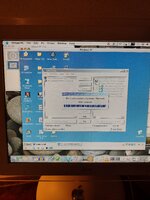

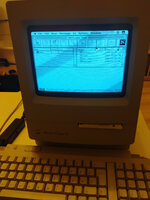
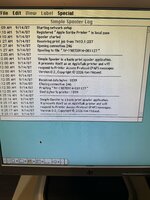
My #MARCHintosh project this year is called Simple Spooler -- think of it as the Simple Text of print spoolers. It's an application that runs on old Macs (System 6.0 up to 9.2.2) and lets you share your serial ImageWriter printer over the network, without needing an AppleTalk Option Card.
Currently it's working for printing to both the ImageWriter I and II, and should also work with an LQ though it's not yet been tested with a real one.
LaserWriter spooling support is partially done and working only with a specific version of the LW driver; will be striving to have it working well with all driver versions in March.
You can grab a pre-release copy on #GlobalTalk, from Puppet Head:Ken's Stuff:Simple Spooler 0.2: in the Cloudbusting zone.
HiThis year, along side @thecloud, I wrote a virtual AppleTalk ImageWriter II printer in Python called Softserve. It shows up on your Ethernet network in the Chooser so you can print locally or even via GlobalTalk when you have an appropriate router. It can emulate a regular ImageWriter II as well as the wide ImageWriter LQ. It saves the print files and then automatically converts them to PDF for instant viewing (PDF viewing uses this ImageWriter CLI tool). In the next few days, I'll add an additional program that will let you send the print file to your actual ImageWriter II or LQ printer connected via serial. The program is written in Python and was tested on a Raspberry Pi. It's rough and ready but it works. You can find it in the Biosrhythm zone on GlobalTalk.
Huge thanks to @thecloud for the assistance in developing it in tandem with the Mac-based Simple Spooler project. It was really a lot of fun to write and I feel like I learned a lot about the AppleTalk protocol that I didn't know before.
Hope you find it useful!

This is good to hear. Glad it worked for you! I didn't realize that the Apple Scribe essentially uses the same commands and can be treated as if it were an ImageWriter printer. The Apple Scribe reference manual seems to have a complete list of its supported commands so I'll go through them and see if there are any differences between it and the ImageWriter II. (Note there is an ImageWriter I mode checkbox in Simple Spooler, because the ImageWriter I doesn't support several newer commands that the ImageWriter II driver can send.)Five Stars!!! This is the last piece of what i was hoping to accomplish with my 2026 Marchintosh - with this tool i was able to share out my Apple Scribe Printer (a thermal printer mainly for appleIIc) but connected to my PowerMac6100/66av. It is now able to be printed to directly on my Localtalk network - and thus also to members of GlobalTalk . Thank you so much! (The zone is YUL_GLOBALTALK)
I considered checking that box - but lets see what happens!This is good to hear. Glad it worked for you! I didn't realize that the Apple Scribe essentially uses the same commands and can be treated as if it were an ImageWriter printer. The Apple Scribe reference manual seems to have a complete list of its supported commands so I'll go through them and see if there are any differences between it and the ImageWriter II. (Note there is an ImageWriter I mode checkbox in Simple Spooler, because the ImageWriter I doesn't support several newer commands that the ImageWriter II driver can send.)